
As AI threatens to disrupt the way we do market research, it’s the human stuff—curiosity, lived experience, and what we do outside the office—that sets good analysts apart from good software. This is most obvious when we stop to reflect on how we work.
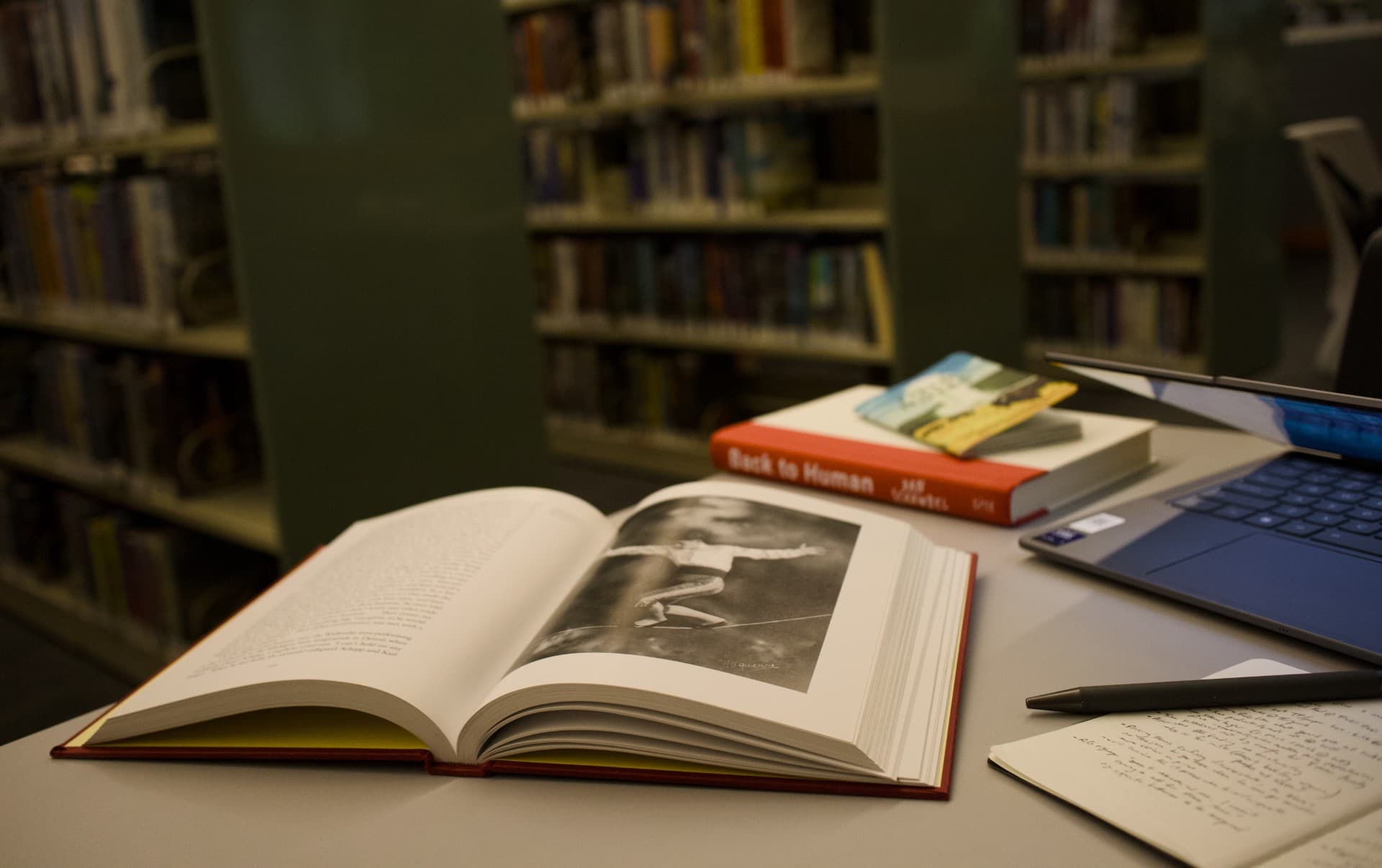
I personally love working from home, but occasionally I’ll pack up my laptop and make my way to one of Little Rock’s public libraries. On top of the mental boost I get from changing up my environment, I also think being physically surrounded by all the world’s knowledge is a subtle reminder that there is always something new to learn. In this setting, I’ll inevitably catch a glimpse of an interesting book just begging me to flip through its pages, and you’d be shocked how often that seemingly irrelevant text seems to somehow find its way into my work or mysteriously answer a question I’ve been scratching my head about. This is exactly how I learned the unexpected lesson of the Bavarian sofa-maker at the opera, whose century-old story connected with this modern market researcher who likes hanging out at the circus.
The story couldn’t have found me at a better time. This year, alongside the explosion of AI tools, I had a milestone birthday and changed jobs for the first time in seven years. That trio of happenings has had me thinking a lot lately about what the next decade of my career will look like. I’ve been asking myself questions like: what kind of humanity do I want to demonstrate in my work? What points of inspiration will I let shape it? And which personal skills and perspectives do I want to nurture not just for my work, but for my own good?
Historically, some of my favorite research projects have been ones that weren’t totally straightforward. I don’t mind when unexpected questions pop up and ask us to think outside the box, dig deeper, or forge a new path altogether; in fact, I’d prefer to get my hands a little dirty on those creative assignments that other analysts might rather delegate to Copilot or Claude. When I’m writing or presenting a report, I tend to reject sterile slides smattered with statistics; I like to balance numbers with narrative; and I always strive to add some kind of personal touch that makes the end product feel a little more honest. That’s not just because I want the research to be more engaging and interesting; it’s also because I want to spend my time at work cultivating a craft, not just doing the bare essentials that’ll get me through the next project.
So it’s no wonder a dusty old copy of The Way of the Storyteller caught my eye recently while I was wandering down a non-fiction aisle at my favorite library. When I cracked it open, I realized my craving for authenticity isn’t unique to a world where AI is bleeding into life’s every nook and cranny. Even a hundred years ago, on the other side of the world, people in all kinds of industries were looking for ways to inject some humanity into their various types of work.
In the second chapter of that old book, author Ruth Sawyer introduces a Bavarian furniture builder who took several days off work with his colleagues every year when the opera came to town. His young apprentices, so focused on making money, couldn’t comprehend how closing up shop for a week made good business sense, but the man was adamant that spending their time at the opera and participating in all its festivities was a strategic business decision designed to improve the quality of their craft and give them a competitive edge. He explains his position well: "All the goodness, the lift of the heart that we got out of playing in those operas, we would put back into our work—in the draperies and tapestries we hung, in the cabinets we made. Nothing was lost. That is how it should be when you have experienced something great and beautiful… Something of those operas will go into your sofa."
It’s the same reason GoPro employees are required to take Thursday afternoons off to do something fun (and film it), or why some Google campuses feature indoor slides, basketball courts, or rock-climbing walls. It’s also why I have grown to believe my background as a professional juggler has made me a better researcher. The link between these two very different career paths might not be intuitive at first, but I’ve seen the lesson play out in a thousand small ways over the years. For example, if I can get a crowd of people emotionally invested in a silly act without saying a single word, then it’s not so hard a task to get high-level executives to care about a quarterly report they paid good money for. Or if I can help your average Arkansan follow and appreciate the technical aspects of a fast-paced juggling routine, surely I have the skills to help those executives understand (and explain to their own stakeholders) the complex details of the research.
After enough examples, it has become clear that my stage time adds something unique to my research chops, and vice versa. All the goodness I encounter from either side of my career goes back into the work I put into the world. “Nothing is lost.” You don’t need some master plan to find the right artistic endeavor that will feed your work; if you’re like me, you certainly won’t be able to connect all those dots from the beginning. But I believe if you follow whatever artistic beauty you’re drawn to, it’ll stay with you and come out when the time is right.
“If you stuff yourself full of poems, essays, plays, stories, novels, films, comic strips, magazines, music, you automatically explode every morning like Old Faithful. I have never had a dry spell in my life, mainly because I feed myself well, to the point of bursting.” – Ray Bradbury
We live in a time where more and more of what we take in is made by robots who can’t think or feel, and more and more people are craving an alternative that feels human and real. So if you’ve been feeling like it’s time to add a little special something to whatever you do, I would urge you to see an old movie just for the fun of it, go to a concert to hear a band you’ve never heard, or spend some time engaging with a creative hobby you’ve ignored for too long. If all else fails, walk through a library and flip through the books that catch your eye; you never know when or how those influences will show up in your own cabinets and tapestries. And even if your favorite AI agent can’t quite appreciate the beauty, we—your human colleagues—will be grateful to see the art and the heart you let shine through your work.
Blayk Puckett
LEAD ANALYST
CATAPULT INSIGHTS