
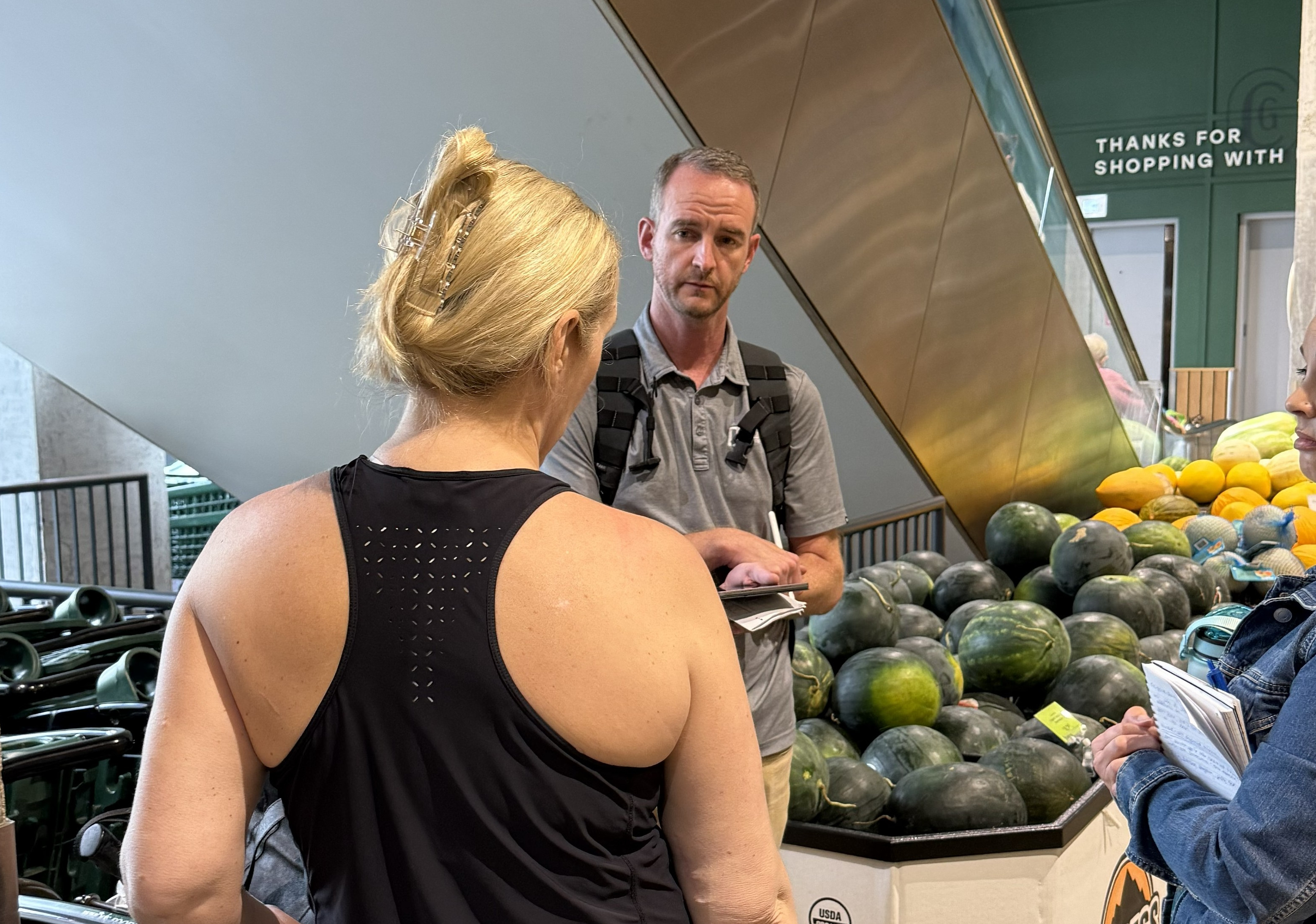
Earlier this month, I was in Chicago conducting in-store shopalongs when a tornado rolled through the area. That wasn't part of the discussion guide.
One moment we were walking the aisles talking about shopping behavior, decision-making, and category choices. The next, store announcements were directing everyone to shelter in place as severe weather moved through. The store shut down around us, and shoppers, employees, researchers, and respondents all waited it out together. Eventually, the weather passed, the store reopened, and we picked the interview back up and finished it.
This wasn't the first time something like this happened in the field. After enough years conducting research in people's homes, workplaces, stores, and communities, these moments become surprisingly common. I've had an in-home interview interrupted by a fire breaking out elsewhere in the house. I've had an ethnography stop cold because gunshots were heard nearby. I've had participants receive genuinely life-changing phone calls mid-interview. You never expect any of it. But eventually you learn: when you're researching real life, expect real life to show up.
The illusion of control
One of the funny things about research is how much effort goes into planning it. We write recruitment criteria and screening questions, build discussion guides, align on objectives, and think through every activity, timing, and piece of stimulus. Good research design requires all of that — preparation genuinely matters. But no amount of planning eliminates reality. The moment you leave the facility and step into someone's actual world, you're entering an environment that belongs to them, not to you. Life happens, and honestly, that's part of the value.
Some of the most memorable moments I've had in research happened outside the discussion guide entirely. It’s not because they were dramatic, but because they revealed something authentic about the reality people navigate every day. Consumers don't live inside neatly controlled research environments. They live inside real life. That's what we're there to understand.
Safety first, research second
Whenever something like this happens, the priorities get very simple very fast. The research becomes secondary — immediately. That sounds obvious, but it's worth saying out loud, because research projects involve real investment: schedules, stakeholders observing remotely, flights booked, a schedule of participants, objectives everyone's eager to answer. None of it matters when someone might be at risk.
When the tornado warning came across the store this week, nobody was thinking about finishing the shop-along. We were focused on getting employees, shoppers, respondents, and our own team somewhere safe. The interview could wait. It was the same instinct during the house fire, and the same instinct when gunshots interrupted the ethnography — in every case, something larger than the research entered the room and took over. Before we're researchers, moderators, or consultants, we're people sharing space with other people. That responsibility always comes first.
Staying calm matters more than you'd think
Something I've learned over the years is that people take emotional cues from the moderator, often without realizing it. If the researcher panics, the energy in the room shifts. If the researcher overreacts, participants tend to get more anxious. If the researcher becomes the center of attention, the whole dynamic changes. That doesn't mean staying indifferent, or pretending an unusual event isn't unusual. It means responding with a level head. Moderators influence more than we realize: the pace of a conversation, the tone of an interaction, sometimes even how honestly someone is willing to talk. The same holds during a crisis. The goal isn't to become part of the story. It's to help people feel supported while the situation unfolds on its own terms.
That requires a mixture of practice and perspective because while these moments may feel extraordinary to us, they're often just part of the participant's normal reality. What feels like a disruption to the research is often just another chapter in the participant's day.
The best context often comes from imperfection
One reason I love ethnography, shop-alongs, and in-home research is that they constantly remind you how different real life looks from the simplified version retold in conference rooms. It's easy to construct a theory about how consumers make decisions. It's much harder to actually watch a decision happen while distraction, competing priorities, stress, and plain randomness are all going on at once — and that's usually where the real richness is found. Consumers rarely get the luxury of deciding things under perfect conditions. They decide while rushing, while multitasking, while worrying about something else entirely. In other words, they make decisions the way the rest of us actually live — messily. Research done in real environments teaches humility for exactly this reason: it keeps reminding you that behavior doesn't exist in isolation. It's tangled up in context, circumstance, and whatever else happens to be unfolding in that moment.
The story behind the story
Looking back, the tornado itself isn't what I'll remember most from this week. What I'll remember is how people responded — employees helping customers, shoppers adjusting their plans, respondents staying remarkably calm through an obviously strange situation. The interview didn't stop because shopping behavior stopped mattering. It stopped because something bigger temporarily took priority, and once that passed, life picked back up right where it left off.
There's something worthy of our attention here. Researchers spend a lot of time studying decisions, habits, and motivations — and unexpected moments like this often reveal those things just as clearly as the discussion guide does, sometimes more clearly, not because we're studying the disruption itself, but because we're watching how people adapt when life refuses to follow the script.
One of the reasons I still love fieldwork after all these years is that it never lets you get too attached to your plan. Every project starts with objectives and carefully built questions, and those things give the work structure. But every so often, reality reminds you who's actually in charge, and the research becomes something simpler: human beings responding to an unexpected moment. The job in those situations isn't to force the research forward or protect the discussion guide. It's to stay calm, prioritize people, and adapt. Because when you're researching real life, real life eventually shows up — and if you're lucky, you learn something from that too.
JUSTIN SUTTON
CO-FOUNDER
CATAPULT INSIGHTS
Justin Sutton has led qualitative and mixed-method research programs for brands including retail, QSR, CPG, financial services, and durable goods organizations. His work focuses on behavioral drivers, innovation, Moments of Truth, and the intersection of System 1 and System 2 decision-making.