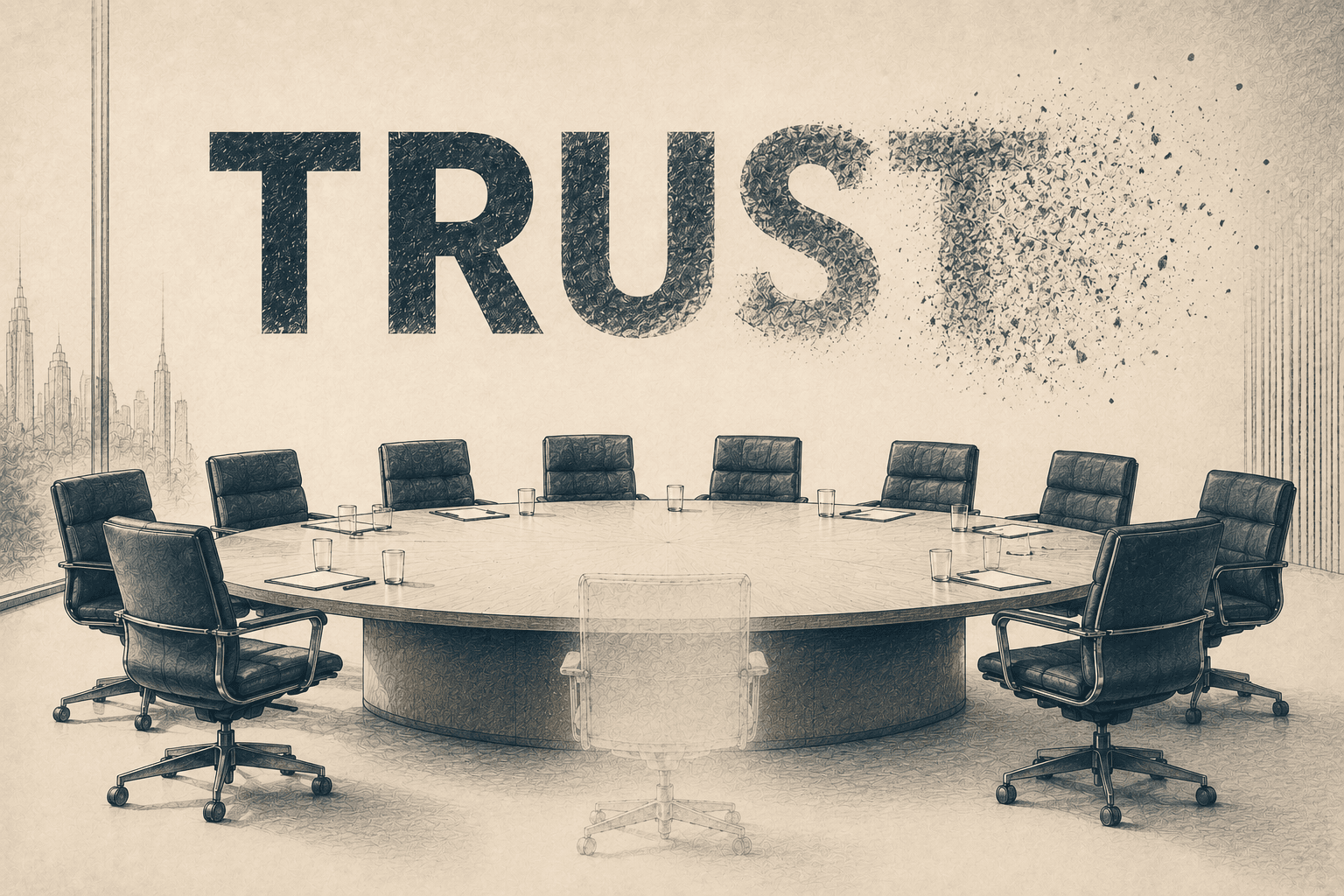
Research professionals talk a lot about wanting a “seat at the table.”
But a seat isn’t something you ask for. And it’s not something you keep just by delivering insights on time. A seat at the table is earned or lost through trust.
And in today’s environment, trust is under more pressure than ever.
Influence comes from credibility
Most organizations don’t struggle with a lack of data – quite the contrary, as Jill recently pointed out. They struggle with deciding what to believe, what to act on, and what to ignore. This is where research is supposed to matter most.
Yet many research teams lose influence not because their work is wrong, but because stakeholders lose confidence in how conclusions are reached. When insights feel overly convenient, overly certain, or suspiciously aligned with existing opinions, trust begins to erode, even if no one says it out loud.
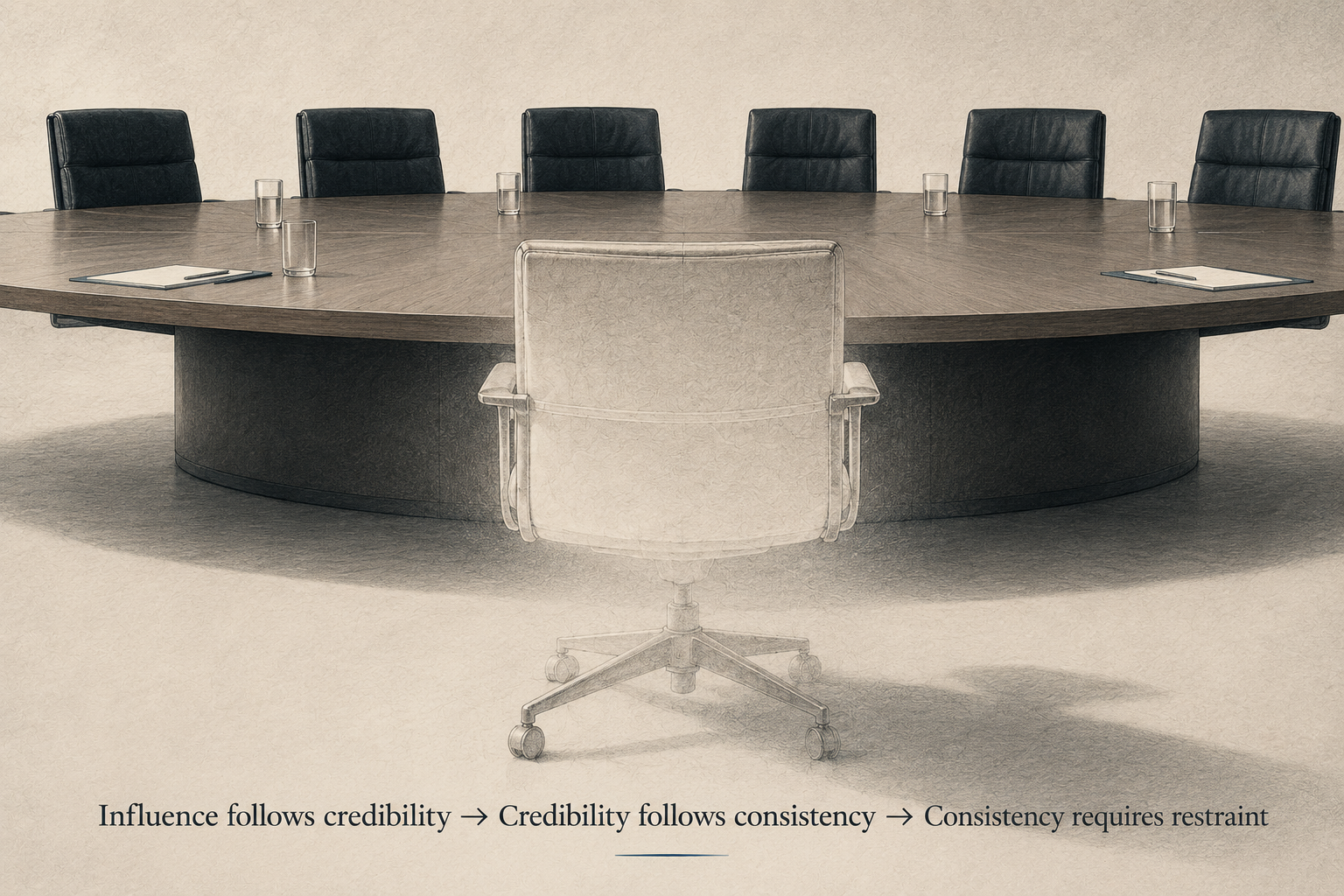
How trust in research erodes
Trust in research rarely disappears all at once. It fades gradually, often through well‑intentioned compromises. It erodes when:
Insights are stretched to answer questions the study wasn’t designed to address
Nuance is stripped away to make findings easier to socialize
Research becomes a service function that confirms direction instead of challenging it
None of this happens because researchers don’t care. It happens because the pressure to be helpful is real—and constant. But helpfulness without rigor is not a virtue. It’s a liability.
The pressure no one likes to name
It’s also important to acknowledge something that rarely gets said out loud. Many research professionals are operating from a place of real insecurity.
They’re watching peers get laid off, running into glass ceilings that make advancement feel elusive, seeing fewer open roles, more competition, etc. And there's growing anxiety about being replaced, whether by AI, by cheaper external suppliers, or by internal teams that believe “anyone can run research now.”
That environment changes behavior.
When job security feels fragile, the pressure to be agreeable increases. The temptation to be a “yes‑person” grows stronger, and pushing back starts to feel risky. Saying “we can’t answer that” can feel like putting a target on your back.
So researchers bend, stretch, and accommodate. Not because they don’t know better, but because survival feels more urgent than stewardship.
And that’s the trap.
Ironically, this dynamic is usually a symptom of an already weakened research organization: one where trust is low, expectations are unclear, and research is valued more for speed than for judgment. In those environments, being endlessly accommodating may feel like self‑protection. But over time, it does the opposite. It accelerates the erosion of credibility, reinforces the perception of research as a service function, and makes researchers more replaceable—not less.
The difference between insight and speculation
One of the most important roles research professionals play is drawing a clear line between what the data supports and what we are inferring. That line can be uncomfortable.
Speculation is not inherently bad. It’s how strategy moves forward. But when speculation is presented as truth, trust breaks down. Stakeholders may not always know exactly why something feels off, but they can sense when confidence outpaces evidence.
Trusted researchers name speculation rather than trying to eliminate it, saying:
“Here’s what we know.”
“Here’s what we suspect.”
“Here’s what we’d need to learn next to be confident.”
That clarity builds credibility, even when the answers aren’t definitive.
Why saying “no” builds more trust than saying “yes”
One of the paradoxes of research influence is this:
The researchers who say “yes” to everything are rarely the ones leadership trusts most.
Trust is built when researchers:
Push back on poorly scoped questions
Explain why a design can’t deliver what’s being asked
Protect the integrity of the work even when it creates friction
Over time, stakeholders learn something critical: When this team says something matters, it really does. That’s when research stops being optional input and starts becoming strategic infrastructure.
AI, speed, and the new trust problem
Generative AI has intensified this dynamic.
AI can produce answers faster, cleaner, and with more confidence than ever before. But speed and polish don’t equal truth. In fact, they often increase skepticism among senior leaders who’ve seen too many “insight‑driven” decisions fail.
In an AI‑accelerated world, human judgment becomes the differentiator. The research teams that thrive won’t be the ones producing the most output or the most concise direction. They’ll be the ones known for:
Clear reasoning
Transparent limitations
Disciplined interpretation
Trust comes from reliability in these areas.
What trusted research leaders do differently
Across organizations, the research professionals with the strongest influence tend to share a few behaviors:
They frame research as decision support, not answer factories.
Their work is explicitly tied to choices, not just findings.
They design fewer studies, but better ones.
Focus beats coverage every time.
They educate stakeholders along the way.
Not just on results, but on what the research can and can’t do.
They protect context.
Even when it complicates the story, because not everything can be infinitely boiled down.
These leaders manage tension thoughtfully instead of avoiding it.
The real meaning of a “seat at the table”
A seat at the table is a strong signal of being trusted when the stakes are high. That trust is earned when research professionals:
Consistently tell the truth, even when it’s incomplete or uncomfortable
Resist false certainty, even when it’s tempting
Prioritize long‑term credibility over short‑term approval
Because in the end, organizations don’t need researchers who always have an answer. They need researchers whose answers are worth acting on.
JUSTIN SUTTON
CO-FOUNDER
CATAPULT INSIGHTS
Justin Sutton has led qualitative and mixed-method research programs for brands including retail, QSR, CPG, financial services, and durable goods organizations. His work focuses on behavioral drivers, innovation, Moments of Truth, and the intersection of System 1 and System 2 decision-making.