
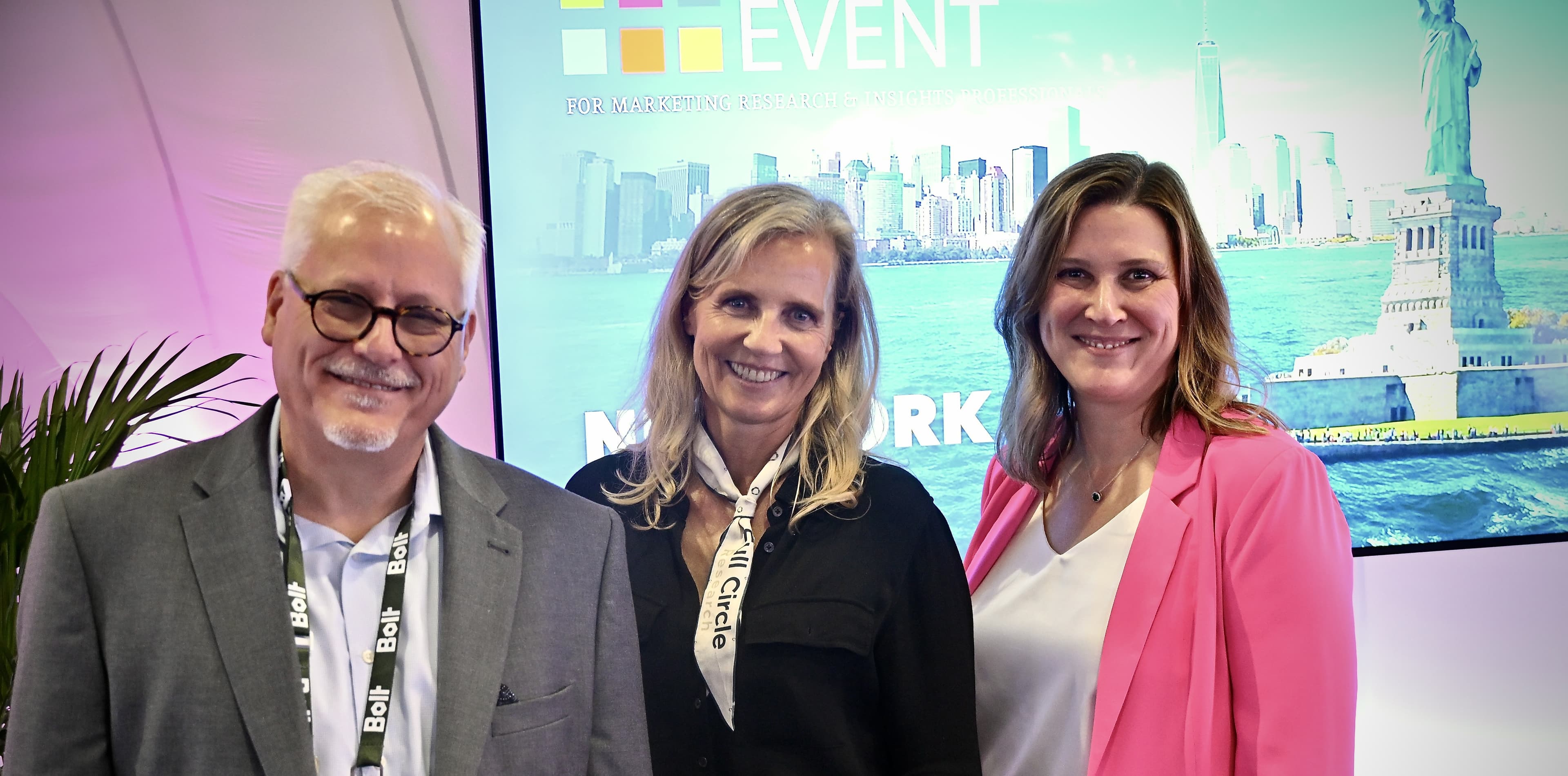

I attended Quirks NYC 2026 last week and left feeling energized by the lively discussions and thoughtful presentations. Throughout the event, a few themes kept resurfacing across sessions and hallway conversations. Here are the three that stood out to me most.
1. Immersive, human-led qual is holding its ground
Given how much attention next-gen research tech, AI personas, digital twins, and AI-moderated interviews, are getting right now, the staying power of human-led qualitative work was one of the more notable threads at the conference. And it wasn't just a fringe position; it showed up across brands, categories, and sessions.
"The innovation blind spot" presentation made the case most directly: while the industry has had a major focus on AI and automation, it is critical that we don’t forget that putting researchers in context — in the room, in the environment, alongside the people they're trying to understand — is often what we need to drive true innovation. ASICS's session on "Bringing the human back into research" backed that up with a concrete example of how decades of scientific testing and consumer data still left a gap in understanding comfort that only direct, in-person immersion with runners could close.
What stood out to me underneath all of this is that immersion isn't really about the method, it's about empathy. It's easy for empathy-building to get treated as “nice to have" in a research practice that's under pressure to move fast and produce more, but it's arguably one of the most important, and most easily neglected, parts of the job. Getting close enough to a brand's consumers to actually understand their context, frustrations, and motivations is what gives a researcher a holistic view of who they're designing for. Without that, it's easy to create products and services that test well on paper but miss what people actually need and want in their lives.
Takeaway for brand-side teams: The appetite for speed and scale hasn't replaced the need for depth. If your research portfolio has drifted entirely toward fast, remote, or automated methods, it may be worth carving out room for slower, immersive qual. Not just because it produces richer findings, but because the empathy it builds is often what separates a product that tests well from one people actually want.
2. Data quality is an evolving concern
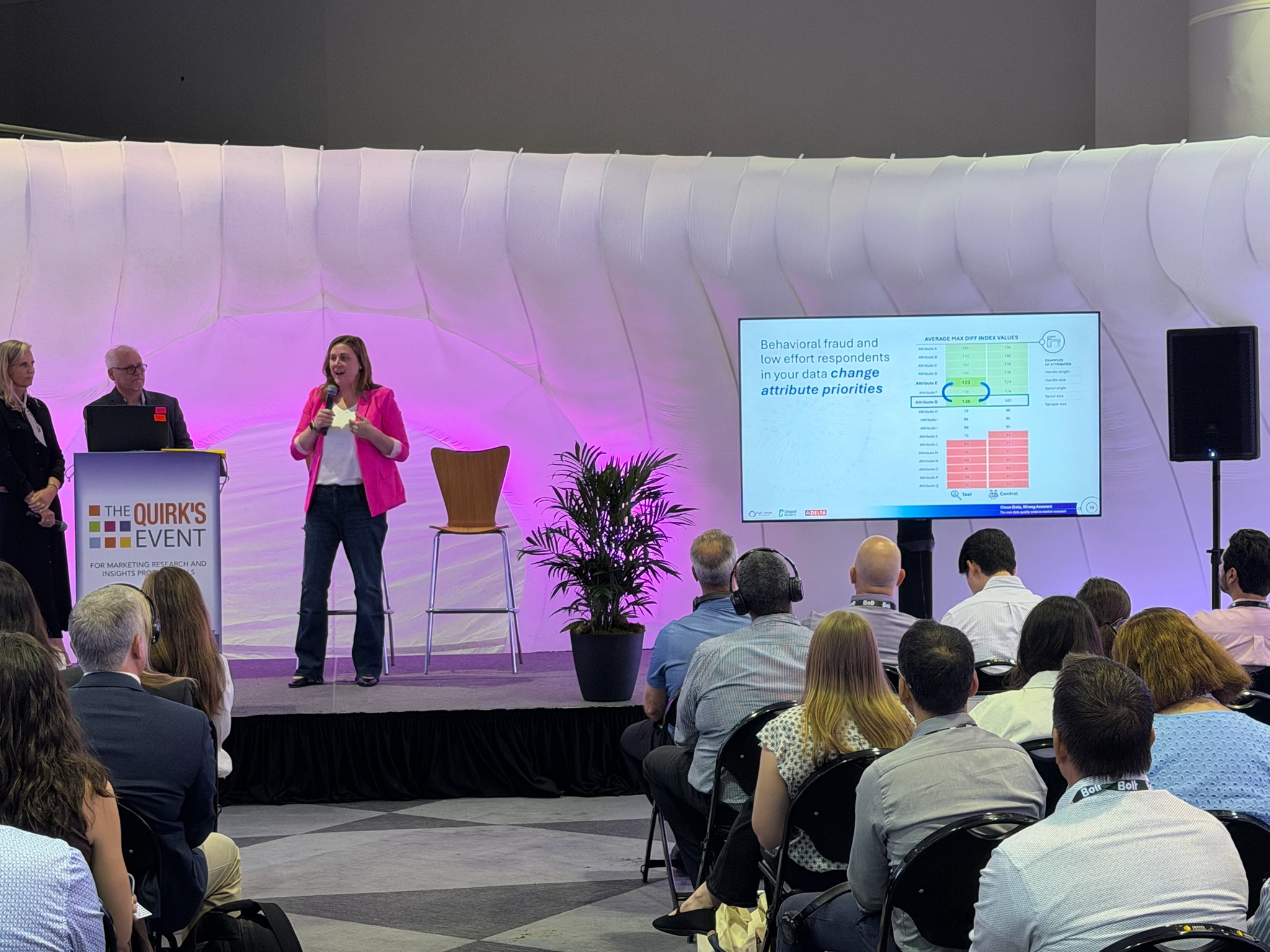
This was the focus of my own session, "Clean Data, Wrong Answers: The New Data Quality Crisis in Market Research," alongside Delta Faucet Company and Full Circle Research. The premise: most teams have gotten reasonably good at the basics — blocking bots, flagging duplicates, monitoring survey behavior. But real data quality requires more than technical checks, we also need to consider the behavioral aspects of a respondent. It stands to reason that inattentiveness and low engagement responses impact our data, the insights we pull from it, and the recommendations we take to our clients.
I was genuinely glad to see how much this resonated. The room stayed engaged well past the Q&A, and the conversations that followed made it clear this isn't an abstract worry, it’s something brand-side researchers are already running into and don't yet have a shared playbook for. That, more than anything, told me the panel hit a nerve worth continuing to dig into. You can download the presentation deck to learn more.
I wasn't the only one on this beat. Sessions on incentive design and asking better survey questions in the first place all made variations on the same point: the industry has invested heavily in fraud prevention, but respondent quality is a different, harder problem, and it's the one that determines whether the insight you hand to a stakeholder is actually right.
Takeaway for brand-side teams: If your quality checks stop at " we screen out the obvious junk," it's worth asking your research partners what a layered view of respondent quality looks like, because a clean-looking dataset and a trustworthy one aren't always the same thing.
3. Our industry is still facing an insights-to-action bottleneck
Multiple sessions hit on the same frustration: solid, well-executed research still gets shelved when researchers haven't built the internal relationships or storytelling needed to move a stakeholder to act. Being right isn't the same as being persuasive.
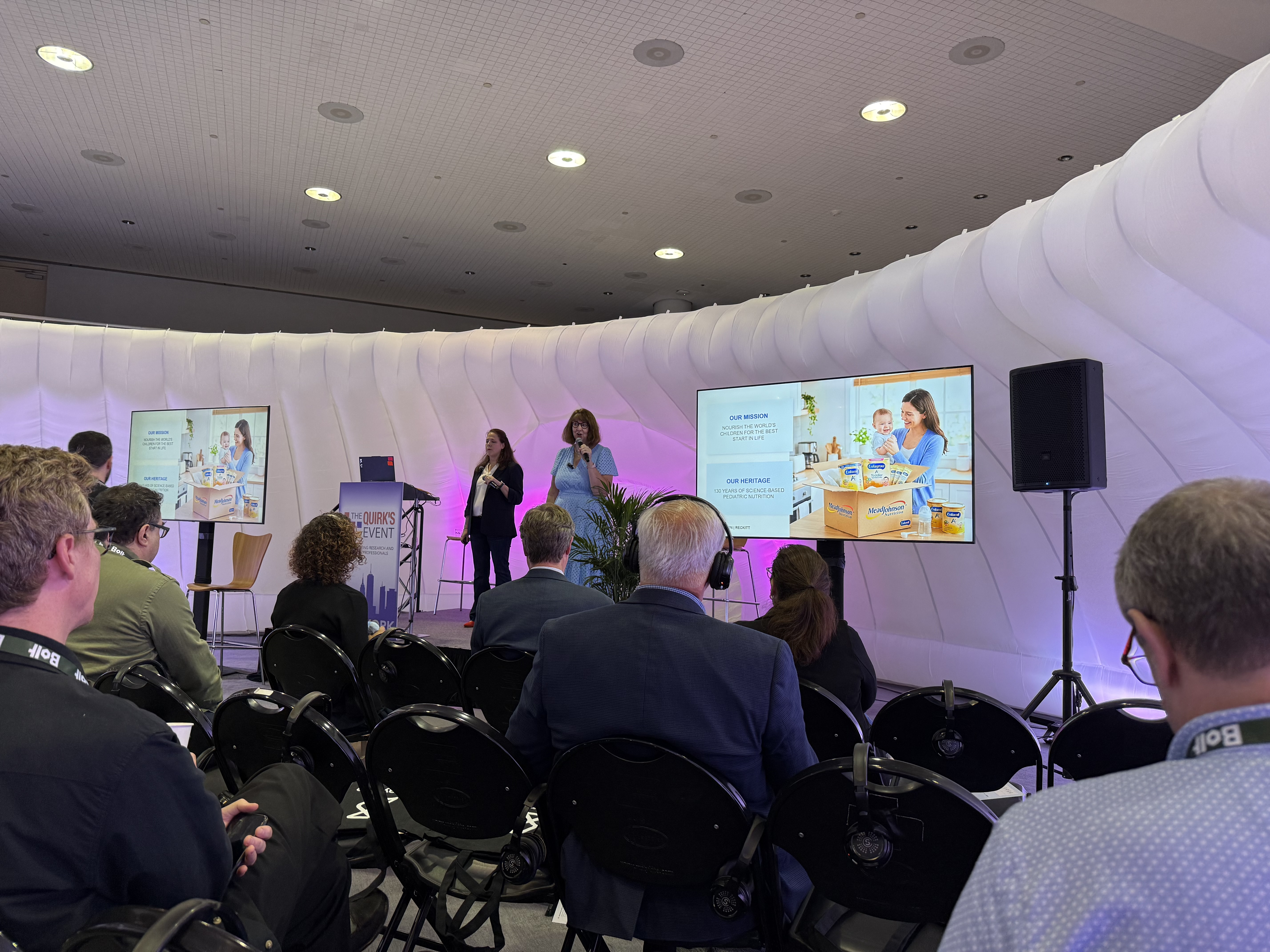
Reckitt Nutrition's session, "Research that never sleeps," reframed the problem in a way that stuck with me. Their argument: most research doesn't have a reach problem, it has an access problem. Studies get completed, reports get filed, and the insights that should be shaping decisions across the business never actually make it there. A lot of that comes down to underinvesting in democratizing research and data access, so the people who need an answer can't easily get to one, and the people who have the answer are stretched too thin to hand-deliver it everywhere it's needed.
One of my favorite quotes was from a brand-side insights leader on the advice she gives her team to “stop working from project to project, let AI handle the small questions, and do your own research to answer the bigger questions.” It's a useful reframe of where a research team's attention could be placed in order to become a more impactful and effective influencer within the organization.
Takeaway for brand-side teams: The differentiator for insights teams increasingly has less to do with the rigor of any single study and more to do with access, influence, and being embedded early enough in a decision to matter.
What I’m walking away with
Underneath all three themes is the same idea: even as the tools available to researchers keep multiplying, the fundamentals haven't gone anywhere. We must:
• Stay close enough to real people to actually understand them
• Know which respondents to trust
• Remain disciplined in our relationships with stakeholders, turning trust into action
Methods will keep evolving, but that judgment is still squarely a human job.
If there's one thing to bring back to your team from Quirks NYC this year, it's that the fundamentals of trustworthy data, having real proximity to your customers, and whether anyone acts on what you learn are still where the real work is.
Want to hear more about Quirks NYC 2026? We'd love to talk. Contact us at hello@catapultinsights.com.
JILL MILLER
CO-FOUNDER
CATAPULT INSIGHTS
Jill Miller combines her background in advanced analytics with qualitative experience to design research approaches to answer her client’s biggest questions across a variety of industries including retail CPG, QSR, food & beverage, and durable goods. She is particularly known for her creative and detailed approaches to segmentation, consumer journey, brand research, and innovation.